

What Older Generations can learn from Younger Ones about getting things done
how younger generations execute and what it reveals about the future of work.

I’ve been thinking a lot about old age recently, especially through the lens of my parents. They’ve lived through multiple eras, watching the world they know shift and reshape around them.
It started with conversations with my mum as she tries to scale her bakery. The conversations have been… fascinating, particularly her utter aversion to quick experimentation but openness to Tiktok and youtube… Like I don’t even have a Tiktok account, what is she doing on there?
It made me pause.
I and many other millennials lived through uncertainty made normal, from cassette tapes, CDs, DVDs, flash drives, and cloud storage - embracing each shift as simply the next, better version of our normal. Not realising that the world wasn’t always like that nor did it shift quite as often. But imagine being someone like my 81 year old dad, who lived through the Biafra war, when radio, newspapers and gossip were the only source of information, when sending a letter meant hours of walking. And now? With a button, you can send a message across the world without leaving your sofa.
I imagine it feels different.
My dad, for instance, is now as impatient as my godson. He expects an instant response once the phone dials, but won’t do and isn’t even interested in the actual work of dialling. He’ll call someone else to press the buttons, then stretch out his hand to receive the phone. And if you let it ring out? His first words would be “I’ve been calling you - where did you go?”
“Sir, for someone who had to trek miles to post a love letter, you are mighty impatient oh. It’s just one ring…”
These reflections evolved into thinking about how older generations, Baby Boomers, and Gen X especially, see and work with Millennials (Gen Y), Gen Z, and the alphabet-soup generations coming after.
Having worked across all these groups, here’s what I’ve observed:
Bias for Action: The normalised relationship younger people have with uncertainty and digital tools often allows them to “just start.” They favour experimentation and are less paralysed by hierarchy or perfectionism. This doesn’t mean they don’t experience uncertainty and all that but that when compared to the Boomers, they have less failure scars so aren’t afraid to just do stuff especially when there’s a digital element to it.
Growth Mindset: They embrace learning through doing. Mistakes are feedback, not failure.
Lower Sunk-Cost Bias: Older people sometimes struggle to pivot because they’ve invested decades in systems, careers, or identities. Younger people have less inertia weighing them down. They’ve probably reinvented themselves at least three times in one decade.
Digital Fluency: I thought Millennials were great with digital tools but when compared to Gen Zs, we are still learning. They execute fast because they prototype with tools like Canva, Notion and AI instantly. What used to take months and thousands of pounds or dollars now takes minutes. My 5-year old learnt how to navigate a tab, set his youtube algorithm to only display his fav channels before he learnt to write - if you mess with it, he gets cranky till he fixes it. His best friend sees adding to cart on amazon as a game and tries to outdo herself each time. Makes me wonder what their alpha generation will be able to achieve with digital tools.
Feedback Loops: The younger generations create based on real-time feedback loops. Social media is a constant A/B test. Every post is an experiment. Every like, share and comment is data. Unlike the Boomers, they are less likely to over-plan and more likely to create MVPs (minimum viable products) just to get feedback.
For Boomers, Gen Xs and some Millennials, these can feel chaotic. For younger generations, it’s just normal life.
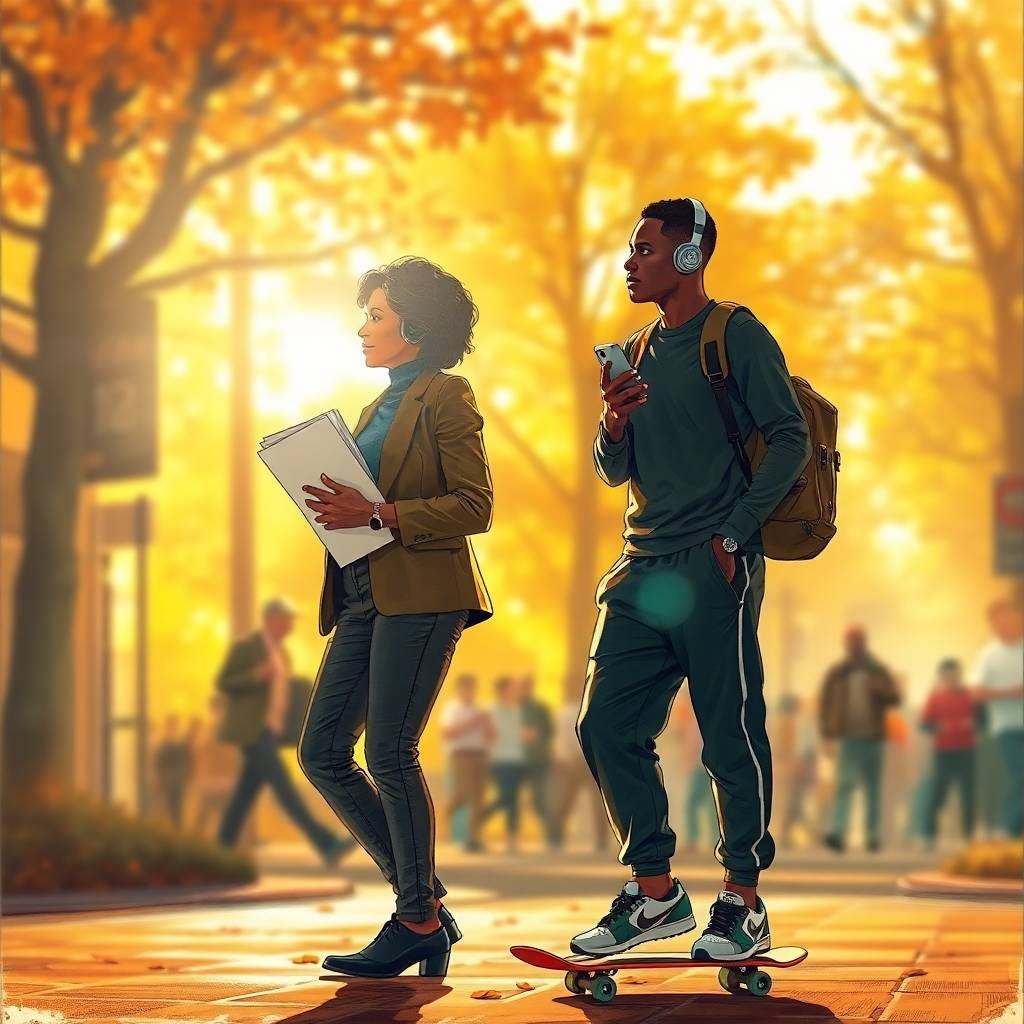
Of these interesting observations, perhaps the most interesting for me was that Millennials and all the generations after may be more willing to experiment and generally seem less paralysed by perfectionism and hierarchy than the Boomers. Beyond the fact that as people and their responsibilities grow, their risk tolerance often drops, I dug deeper and found a few reasons why it would seem so:
Cheaper iteration: Back then, digital tools barely existed and where they did, they were owned by the upper class folks. Thinking about it, what did they have beyond the telephone, TV, radio, fax machine, typewriter and printer? Now digital tools are way more accessible and affordable. So whatever risk exists feels smaller. Meaning less money and time is required to prototype an idea - significantly dropping the cost of iteration as compared to back then.
Openness as a culture: Millennials cracked everything open, and the generations that followed widened the berth. What our parents guarded with discretion, we made public, from private diaries turned into blogs to the now modern norm of building in public. Where their secrecy once preserved both value and dysfunction, our transparency has birthed liberation and excess in equal measure. Through this openness, we have undeniably advanced. We have educated them and one another on consent, abuse, gender equity, and emotional intelligence, topics that their secrecy once silenced. We have dismantled oppressive norms and brought healing language to the forefront of culture.
But this same openness has also eroded the quiet virtues that privacy used to protect: self-respect, dignity, restraint, and put-togetherness (yes I made that word up). The checks and balances that their secrecy once imposed have dissolved. What used to happen in private or in darkness now happens in the open, often celebrated for its audacity rather than questioned for its wisdom. We’ve learned to challenge culture, but perhaps we’ve also unlearned any reverence for it. The respect for boundaries, the idea of discretion as a moral compass, no longer carries the weight it once did. In freeing ourselves from silence, we may have also freed ourselves from shame — and with it, the discipline that once kept us anchored. With this, it makes sense why the Boomers would be wary of experimentation. They are constantly living in ‘tufia kwa’ mode, as all their long held beliefs of preservation and what makes up a person’s identity are eroded daily.
Power distance shrinkage: The over exposure above reduced the fear of hierarchy that was prevalent in the Boomer and part of the Millennial times. Now you can DM or tweet at a CEO, a Governor, even a President at any time. Whatever power our Boomer parents perceived that the institutions and systems had, the younger generations see it differently. The power distance shrunk and hierarchy doesn’t quite hold the same weight. Authority now looks more fallible, so why wait for permission?
Uncertainty as a baseline: Millennials grew up inside rapid feedback loops - everything we did came with a response from parents, friends and peers. A like, a comment, a grade, a clap. Without knowing it, that constant feedback wired us for growth. It taught us that effort creates results, that you can always try again, tweak again, start again. Maybe that’s why when the world flipped with Covid-19, we didn’t exactly freeze, we pivoted. Where others were resting or ranting, we were experimenting and building. We’ve been pivoting our whole lives. From radio and cassette tapes we used biro to roll to Spotify and Apple music subscriptions, from video cassettes and DVD rentals to Netflix and Prime, from dial-up internet to AI in our pockets. And all the mini-phases in between. Think about it, the amount of change Boomers have seen since 1981 (when Millennials were born) is probably more than all the change they experienced before that combined. But for us, it’s just… life. Change isn’t new; it’s normal.
That’s why I call us the transitioning generation. We’ve lived through so many shifts that we’ve learned to move fast, fail forward, and adapt before the dust settles. We are more resilient than we realise and uncertainty doesn’t scare us, it’s our baseline. Yes, it has its downsides, but look at what it’s given us: the gig economy, the creator economy, remote work — entire systems that reward curiosity and experimentation. Which in turn has built a culture that values autonomy, competence, and agency.
Millennials probably take this for granted, but the Boomer generation seem to struggle with this uncertainty. They may have experienced fewer changes, but the ones they did live through — war, slavery, recovery, industrialisation… left marks that never quite faded. The weight of those changes etched itself on their souls like keloid scars. I don’t really blame them, if I’m being honest. There are many of my own personal and professional experiences that have emboldened my super mum, though she balked at them at first. The millennials have learned to find stability inside movement, to build while things are shifting. Maybe the real mark of our generation is that we don’t just survive change, we grow through it.
So, if you’re a Millennial, GenXer, Boomer, or anyone still in the workforce, it is possible and even beneficial to work with, partner with or collaborate with younger people. While you have so much to teach them, you can also learn a whole lot from them, especially about how the world works now.
Here’s what you stand to learn from younger colleagues:
Prioritise speed over perfection: The world moves fast; you can correct as you go.
Learn to iterate out loud: You don’t need the full answer, you just need the next action.
Become excellent users of tools: Think AI, low-code, design platforms. Don’t worry, they won’t replace you, they will support you with faster execution.
Because the truth is that execution is not really about age. It’s about posture and flexibility.
Let me share a random experience that happened the other day. I got on a google meet call and one of the guys greeted me with, “Good afternoon, ma.”
I did a mental double take, confused. I was the only female on the call. Who was he talking to?
Who is Ma? When did I become somebody that is referred to as ma?
Please, I’m in my thirties... I’m not a ma...
Maybe that’s the point: no matter your age, you’ll always feel like you’re somewhere in between your own version of Boomers and Gen Zs. The question is will you be able to reach across both to keep executing anyway?
In my next post, I’ll share what younger generations can learn from older ones when it comes to building and sustaining.
Share with all the Boomers and Gen Xs you know. This might make their next projects much easier.